Quick Summary:
- Encourages mould growth: Malaysia’s high humidity can create favourable conditions for mould, especially when moisture and poor ventilation are present.
- Humidity control is important: DOSH recommends maintaining indoor relative humidity between 40% and 70% to help manage indoor conditions.
- Affects indoor air quality: Excess moisture, mould and limited airflow can contribute to poorer indoor air quality.
- Regular cleaning helps: Cleaning damp-prone and frequently touched areas can help reduce the build-up of dirt and contaminants.
- Professional cleaning can help: When regular household or workplace cleaning is not enough, professional cleaning and disinfection can provide additional support.
Malaysia is known for its warm, tropical climate, but the same humid weather that makes the country green and vibrant can create challenges inside homes, offices and commercial buildings. In this blog, we will explain how humidity affects indoor spaces, why excess moisture can encourage mould and other contaminants, how ventilation influences indoor air quality, which areas require more attention, and how regular cleaning, humidity control and professional cleaning can help. We will also share practical tips Malaysians can use to maintain a cleaner and fresher indoor environment.
Malaysia’s Humid Weather Creates an Indoor Challenge
If you live in Kuala Lumpur, Selangor, Penang, Johor, Melaka or other parts of Malaysia, you are familiar with hot and humid weather throughout much of the year.
While we often think about humidity as an outdoor issue, it can also affect what happens inside a building.
When moisture stays in an indoor space for long periods, surfaces can remain damp. Condensation may develop around windows, walls, ceilings and air-conditioning areas. If the moisture is not addressed, it can create an environment where mould can grow.
DOSH explains that high humidity is an important factor in mould growth and that moisture can enter buildings through flooding, condensation, leaking pipes, windows and roofs.
This means maintaining a clean Malaysian home or workplace is not simply about removing visible dust. Moisture management and ventilation also play an important role.
How Humidity Can Affect Indoor Air Quality
Humidity and indoor air quality are closely connected.
A room with poor ventilation can allow moisture, odours and airborne particles to remain indoors for longer. This can be particularly noticeable in enclosed offices, bedrooms, meeting rooms and commercial premises where air-conditioning is used for long periods.
Malaysia’s Ministry of Health recommends practical ventilation measures for residential spaces, including opening windows where appropriate, using fans and exhaust fans, maintaining suitable temperatures and keeping relative humidity between 40% and 70%.
For non-residential spaces, MOH guidance also highlights the importance of adequate ventilation and taking measures to prevent mould growth caused by excessive humid air.
So, improving indoor air quality is not just about using an air freshener. It starts with managing moisture, airflow, cleanliness and potential sources of contamination.
Why Mould Can Become a Bigger Problem
Mould is one of the most visible signs that an indoor space may have a moisture problem.
You may notice black, green, white or brown patches on walls, ceilings, furniture or other surfaces. Sometimes, however, mould is first noticed through a persistent musty smell.
DOSH states that some fungi can germinate within four to twelve hours under suitable conditions and may grow and spread within 24 to 72 hours when left undisturbed.
This is why mould prevention is better than waiting until a serious mould problem develops.
Simply wiping a visible patch may not solve the underlying issue. If a leaking pipe, condensation problem or poorly ventilated room continues to supply moisture, mould may return.
Effective mould removal therefore needs to consider both the affected area and the source of moisture.
Which Areas Need More Attention?
Some parts of Malaysian properties are more likely to experience moisture, dirt accumulation or frequent human contact.
Pay particular attention to:
- Bathrooms and shower areas
- Kitchen surfaces
- Air-conditioning vents and nearby areas
- Carpets and fabric furniture
- Curtains and upholstery
- Door handles and light switches
- Office desks and shared equipment
- Walls affected by condensation
- Areas near leaking pipes
- Rooms with limited ventilation
- High-traffic commercial areas
These areas can benefit from a consistent cleaning and sanitisation routine.
High-touch surfaces are especially important in shared environments because many people may handle the same surfaces throughout the day.
Is Regular Cleaning Enough?
Regular cleaning should always be the starting point.
Dusting, vacuuming, mopping, wiping surfaces, cleaning bathrooms and maintaining kitchens can help prevent dirt from building up. Air-conditioning filters should also be maintained according to the manufacturer’s recommendations.
However, some properties need more than routine housekeeping.
Homes affected by water leaks, offices with heavy daily foot traffic, commercial premises that have been closed for long periods and areas with persistent odours may benefit from a more thorough approach.
This is where Deep Cleaning can complement normal housekeeping. It focuses on areas that may not receive enough attention during everyday cleaning.
For businesses, professional commercial cleaning services can also provide a more structured approach to maintaining frequently used spaces.
The aim is not to clean every surface constantly. It is about identifying areas where dirt, moisture and contaminants are more likely to accumulate and giving them the appropriate attention.
Why Professional Disinfection Can Be Useful
Disinfection should be considered as part of an overall hygiene strategy rather than a replacement for normal cleaning.
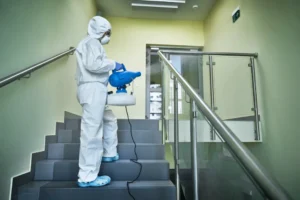
Professional Indoor Disinfection Cleaning can be useful for homes, offices and commercial premises that require additional attention after illness, water-related problems, renovation, prolonged closure or periods of heavy occupancy.
A professional team can assess the space and select suitable cleaning and disinfection methods according to the surfaces and conditions involved.
This can be particularly relevant for businesses looking for reliable office cleaning services where cleanliness needs to be maintained consistently rather than addressed only when a problem becomes visible.
Malaysia’s Ministry of Health guidance also recommends regular disinfection of high-touch points as one of the measures that can support better hygiene in indoor environments.
Humidity Control Should Be Part of Your Cleaning Routine
Cleaning alone cannot solve a moisture problem.
If a room remains excessively humid, mould can return even after the affected surface has been cleaned.
This is why humidity control should be considered alongside cleaning.
Here are several simple steps that can help:
Improve ventilation
Allow fresh outdoor air into suitable spaces when conditions permit. Exhaust fans can also help remove moisture from bathrooms and kitchens.
Maintain air-conditioning systems
Clean filters and check that drainage systems are functioning correctly. Poorly maintained air-conditioning systems can contribute to indoor comfort and air quality problems.
Look for leaks
Check ceilings, walls, windows, pipes and other areas where water may enter the property.
Dry damp materials quickly
Wet carpets, curtains, upholstery and other absorbent materials should not be left damp for extended periods.
Monitor humidity
A simple humidity meter can help you understand the moisture level inside your home or office.
Clean high-touch surfaces
Frequently clean door handles, switches, tables, desks and other commonly touched surfaces.
These steps support the broader principles in Malaysian guidance around ventilation, humidity management and maintaining cleaner indoor environments.
Indoor Hygiene Is Important for Malaysian Businesses Too
Humidity-related cleaning issues are not limited to homes.
Offices, retail shops, restaurants, clinics, schools and other commercial premises can experience similar problems.
A busy workplace can have more people, more movement and more frequently touched surfaces. If ventilation is limited and humidity remains high, maintaining good workplace hygiene becomes even more important.
For businesses, a regular commercial cleaning services programme can help keep common areas, workstations, floors and high-touch surfaces in better condition.
A clean environment can also create a better first impression for customers and visitors.
However, businesses should also investigate the underlying cause when they notice recurring mould, damp smells or moisture problems. Cleaning the visible area without addressing the source may only provide a temporary improvement.
When Should You Consider Professional Cleaning?
There is no single cleaning schedule that works for every property.
A family home, busy office and large commercial premises will all have different cleaning requirements.
You may want to consider professional cleaning services when:
- A musty smell continues despite regular cleaning
- Mould keeps returning
- The property has experienced water leakage
- Many people regularly share the same space
- The premises have been closed for an extended period
- Routine cleaning cannot reach difficult areas
- There has been renovation or construction work
- You want to establish a more thorough hygiene routine
Professional cleaning should complement, rather than replace, everyday maintenance.
The most effective approach is usually a combination of routine cleaning, moisture management, ventilation and targeted professional cleaning when required.
A Cleaner Indoor Environment Starts With Prevention
Malaysia’s climate is naturally humid, so completely avoiding moisture indoors is not realistic.
The better approach is to manage it.
Keep rooms properly ventilated, address water leaks quickly, maintain air-conditioning systems, monitor humidity and clean areas where dust and moisture can accumulate.
For properties with persistent hygiene concerns, sanitisation services and professional cleaning can provide additional support.
It is also useful to remember that indoor cleanliness is not only about how a room looks. A property can appear tidy while hidden areas still have dust, moisture or contamination.
Taking preventive action can therefore save time and reduce the chance of small cleaning issues becoming bigger maintenance problems.
Stay Ahead of Humidity and Indoor Hygiene
Malaysia’s humid weather makes moisture management an important part of maintaining a cleaner indoor environment. Excess humidity, condensation, leaks and poor ventilation can create conditions that support mould growth and affect overall indoor air quality.
The practical solution is to take a complete approach. Keep indoor spaces clean, improve ventilation, maintain air-conditioning systems, monitor humidity and deal with water-related issues as soon as possible.
For homes and businesses that require additional support, professional cleaning can help address areas that ordinary cleaning may not fully cover.
If you are looking for professional support for your property’s hygiene needs, you can learn more about Deep Cleaners’ indoor disinfection cleaning service.
If you would like to discuss your cleaning requirements or find a suitable solution for your property, contact Deep Cleaners to learn more about the available services in Malaysia.
FAQs:
1. Does Malaysia’s humid weather increase the risk of indoor mould?
Yes. High humidity is one of the factors that can contribute to mould growth. DOSH states that consistently high relative humidity, particularly above 70%, can support mould growth when other conditions such as moisture and organic material are present.
2. What is the recommended indoor humidity level in Malaysia?
DOSH identifies 40% to 70% as the acceptable relative humidity range for indoor environments. Keeping humidity within a suitable range can help reduce conditions that encourage mould growth.
3. How can I improve indoor air quality at home?
Improve ventilation where appropriate, use exhaust fans, maintain air-conditioning systems, control humidity and regularly clean dust and high-touch surfaces. Malaysia’s Ministry of Health provides guidance on ventilation and indoor air quality for residential settings.
4. Can professional cleaning remove mould completely?
Professional cleaning can help address affected surfaces, but the moisture source must also be identified and corrected. Leaks, condensation, flooding and excessive humidity can cause mould to return if the underlying issue remains.
5. How often should indoor spaces be professionally cleaned?
It depends on the property’s size, occupancy, usage and condition. Busy offices and commercial premises may need more frequent professional cleaning than lightly used residential spaces. Properties affected by mould, water damage or persistent odours may need attention sooner.